Facial Fat TransferIn St. Louis, MO





Fat Transfer is one of the most exciting developments in facial plastic surgery. Just as aging results from a combination of the face sagging and deflating, the restoration of a younger, vibrant look often requires both lifting and filling to achieve natural results.
Areas that benefit most from facial fat transfer include sunken cheeks and the undereye region. In order to fill these areas, fat is gently collected, by hand, from the belly or thighs and then purified and deposited in multiple tiny parcels in the area of the face to be filled. The survival of the transferred fat is variable, and patients often require 2-4 sessions of fat placement to achieve the degree of symmetry and fullness they desire.
As with most of our surgical procedures, Dr. Nayak performs most fat transfer procedures in our in-office AAAHC-accredited operating suite under local anesthesia or mild sedation. For patients who would like to be more deeply sedated or fully asleep, Dr. Nayak prefers Frontenac Surgery and Spine Care Center or St. John’s Mercy Hospital. At our plastic surgery practice in St. Louis facial fat transfer procedures are done in a calm and relaxing environment.
1 of 4
During your consultation for Facial Fat Transfer St. Louis plastic surgeon, Dr. Nayak will ask you what about your face bothers you, and may also ask you to talk about other, related areas of your face, such as your upper and lower eyelids, nose, jawline, or neck Dr. Nayak will likely ask you to point out, very specifically, what you’d like to see changed. Identifying exactly what needs to be addressed is the cornerstone of good results!
Dr. Nayak will then review your medical history form, and may ask for some additional information from you. Current and past smoking habits, or the use of nicotine gum or patch products, are especially important to mention to Dr. Nayak during this part of the consultation as nicotine dramatically reduces the chances of proper healing. Dr. Nayak will also pay special attention to parts of your medical history that need to be considered carefully when undertaking facial fat transfer surgery, such as uncontrolled high blood pressure, or any medications or supplements you may take that thin the blood. In general, all over-the-counter pain/fever reducers (except Tylenol) are off-limits for 2 weeks before and after facial fat transfer surgery, as are ginkgo biloba, St. John’s Wort, or high doses of fish oil, flax seed oil, or vitamin E.
Dr. Nayak will then examine your face and neck to determine exactly what must be corrected to achieve optimum results.
He will also ask to see potential fat donor areas, such as your belly, hips, or inner and outer thighs. In addition, should you desire improvements of the eyelids, brows, nose, jawline, or neck areas to achieve balanced results. Dr. Nayak will take a few moments to discuss these options with you to make sure they meet your personal esthetic goals.




Once you have decided to undergo fat transfer surgery, Dr. Nayak’s staff will help you schedule your surgical date, and, about 2 weeks preceding that, a preoperative visit.
Expect to spend about 90 minutes in the office on the day of your preoperative visit. During this visit, you will be educated on before instructions, after instructions, and prescriptions. Written copies of all of these will be given to you at this visit, as well, and you will be able to fill your prescriptions ahead of time.
You will also be reminded at this time to avoid for 2 weeks before and after surgery any medications and supplements that thin the blood. Also at the preoperative visit, your private preoperative photographs will be taken, and the surgical consent form will be read to you. Finally, at the conclusion of this visit, the balance of your surgical, facility, and anesthesia fees will be due.

In general, you will be asked to arrive at 7:15 AM the morning of your planned surgery. If you are having your surgery at an outside facility, you may be asked to arrive earlier. You should have nothing to eat or drink (not even water, candy, or gum) after midnight the night before your procedure.
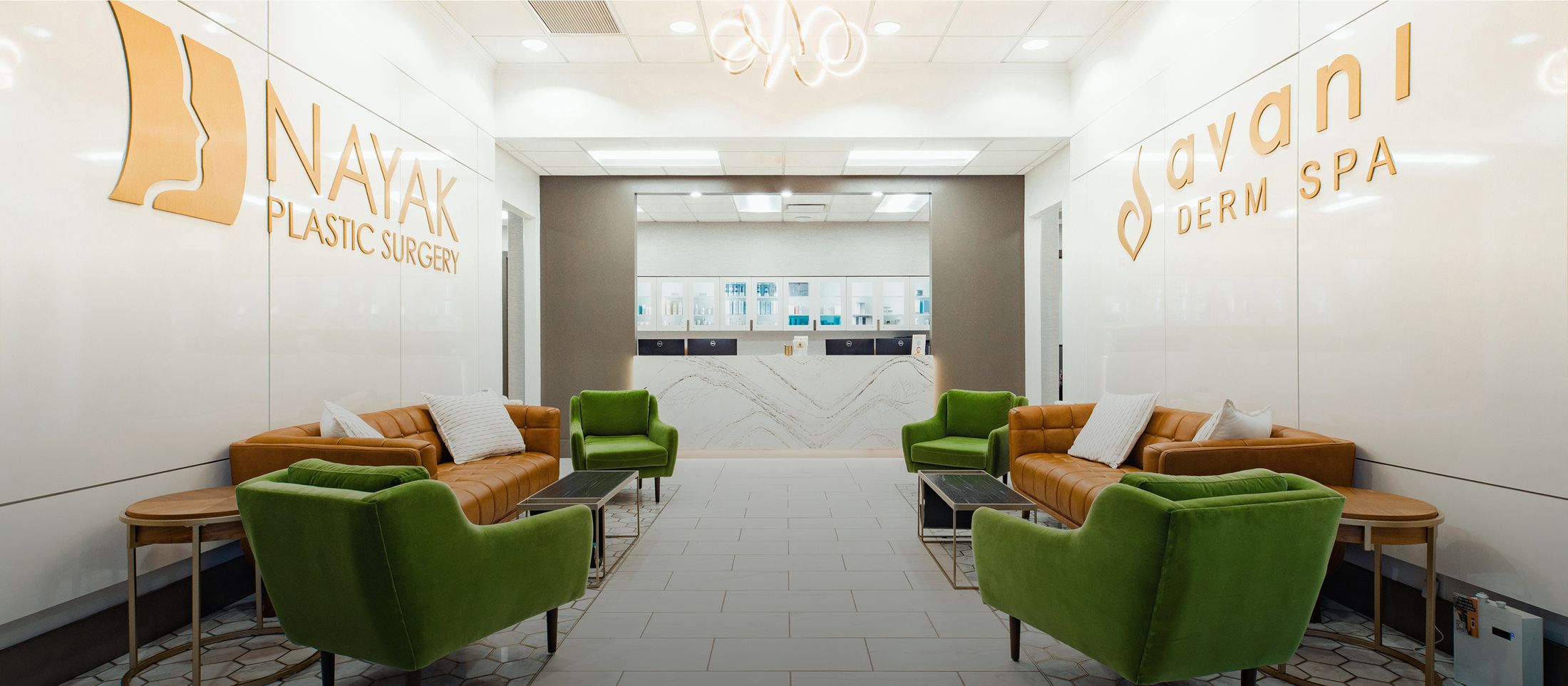
If Dr. Nayak prescribed antibiotics, oral sedatives, or if you take blood pressure medication in the mornings, you may take these with a small sip of clear water. You will need an adult driver on the day of your surgery to bring you and to take you home. Your companion may wait in our comfortable reception area, watching TV, reading, and enjoying coffee, soda, and snacks. Alternatively, if your companion wishes to leave a cellular telephone number, we can call him or her with updates and also at the conclusion of the procedure.
Upon your arrival, Dr. Nayak’s staff will greet you and review your medical history, looking for any new changes since your initial consultation. Dr. Nayak and his staff will also confirm that they and you are in agreement about which procedures are to be performed, and those areas will be marked with you sitting upright in a chair. If you are a woman under 50 and have not been surgically sterilized, a urine pregnancy test may be performed. In any case, you will have one last opportunity to have last-minute questions answered and use the restroom, and will be escorted to our AAAHC-accredited surgical suite.
Once there, you will be positioned comfortably on your back, with pillows behind your knees and under your neck. Blankets are also available if needed. You may also bring your own iPod or CD’s, or listen to our choice of soothing music. Painless blood pressure and oxygen monitors will be placed on your arm and finger, and massaging air-filled stockings will be placed on your legs and thighs to encourage excellent circulation while you are lying down. Most patients truly enjoy these stockings and find them very soothing. Dr. Nayak and his staff will then perform one final “time-out” aloud to ensure they are about to embark on the appropriate procedure on the appropriate patient. As the sedation takes effect, you will drift off to sleep and your face, (and any other areas that require incisions) will then be slowly, gently numbed with local anesthesia, and sterile towels will be placed around your face and neck. Dr. Nayak will begin the procedure by making a pinhole in the skin of your fat donor site through which to harvest fat. The fat will be purified, and then placed into the appropriate areas of your face through even smaller pinholes. There will be no actual incisions, and no sutures.

Most patients take their prescribed pain medication for 24-36 hours after the procedure, and then switch to Tylenol – all other over-the-counter pain preparations are off-limits. Many patients take Tylenol alone right from the start. If Facial Fat Transfer surgery has been performed by itself, there is no need for a checkup the day after surgery. If other procedures, such as a facelift, were performed, you will be asked to come to the office for a dressing removal and check up visit.
Your Recovery – Day 1
At the conclusion of your procedure, Dr. Nayak will tell your companion how everything went, and he or she will have the opportunity to see you. You will be moderately bruised and swollen at this point. No dressings will be used unless other procedures have been performed together with the Facial Fat Transfer.
You will be asked to spend 1 hour with us prior to being discharged. Dr. Nayak will call you the evening of the procedure to check on your progress, and you will also be given Dr. Nayak’s personal cellular phone number in case questions should arise after hours or on the weekends.
Your Recovery – Week 1
Most patients feel no pain whatsoever immediately after surgery. Many patients find they nap intermittently the first afternoon. Later in the evening, most facial fat grafting patients report a feeling of tightness or swelling in the treated areas.
You will be able to shower and get all the pinholes wet the first day after surgery, as soon as you have your dressing (if any) removed. You will be asked to use intermittent cold compresses and sleep with your head elevated for the first few days.
On the 6th or 7th day after surgery, you will return to the office for a checkup. If you have significant bruising remaining at this point, it may be treated with a laser to hasten its disappearance.
By the 7th day, women may wear makeup, men may shave, and almost everyone is “presentable” to run errands or go back to work. Especially easy bruisers, or patients over 65, may require another 2-3 days for most of the bruising to resolve. By 2-3 weeks, most people are “undetectable”. If you are not self conscious about being seen with bruising or sutures in place, or work from home, expect to be back to work within 3-4 days!
Over the ensuing weeks and months, you will find the pin holes through which the fat was placed vanish. The shapes and contours of your face look subtly enhanced, but not dramatically changed. By 2-3 months after your procedure, it will be possible to judge whether or not additional sessions of Facial Fat Transfer are necessary to optimize shape or symmetry. Once optimal results are obtained, benefits are durable, and our St. Louis Facial Fat Transfer can last for many years.

Frontenac
Monday: 8:00 AM – 5:00 PM
Tuesday: 8:00 AM – 7:00 PM
Wednesday: 8:00 AM – 5:00 PM
Thursday: 8:00 AM – 7:00 PM
Friday: 8:00 AM – 5:00 PM
Saturday: 8:00 AM – 12:00 PM
Sunday: Closed
Des Peres
Monday: Closed
Tuesday: 8:00 AM – 7:00 PM
Wednesday: 8:00 AM – 5:00 PM
Thursday: 8:00 AM – 7:00 PM
Friday: 8:00 AM – 5:00 PM
Saturday: Closed
Sunday: Closed
Chesterfield
Monday: 8:00 AM – 5:00 PM
Tuesday: 8:00 AM – 5:00 PM
Wednesday: 8:00 AM – 5:00 PM
Thursday: 8:00 AM – 5:00 PM
Friday: 8:00 AM – 5:00 PM
Saturday: Closed
Sunday: Closed