Blepharoplasty In St. Louis, MO
Lifts and tightens the eyelids to restore a brighter, more youthful appearance.


Lifts and tightens the eyelids to restore a brighter, more youthful appearance.





The eyelids are a common source of dissatisfaction with one’s looks. The graceful, rounded, unbroken contours of youth give way to the bags and deep valleys (“dark circles”) that characterize middle age. Related areas, such as the skin of the lower eyelid and the apples of the cheek, often age similarly.
1 of 31
Choosing to undergo eyelid surgery at Nayak Plastic Surgery provides a comprehensive rejuvenation of the upper and lower eyelids. By addressing the specific structural causes of aging, such as protruding fat pads and excess skin, our surgeons restore a rested, alert appearance that remains anatomically natural.

During your consultation for a blepharoplasty St. Louis plastic surgeon, Dr. Nayak will ask you what about your lower eyelids bothers you, and may also ask you to talk about other, related areas of your face, such as your upper eyelids, cheeks, and lower eyelid muscle strength. Dr. Nayak will likely ask you to point out, very specifically, what you’d like to see changed. Identifying exactly what needs to be addressed is the cornerstone of good results!
St. Louis blepharoplasty provider, Dr. Nayak will then review your medical history form, and may ask for some additional information from you. Previous eyelid surgery, LASIK surgery, and tendencies toward dry or runny eyes are important to mention to Dr. Nayak during this part of the consultation. Dr. Nayak will also pay special attention to parts of your medical history that need to be considered carefully when undertaking eyelid surgery, such as uncontrolled high blood pressure, or any medications or supplements you may take that thin the blood. In general, all over-the-counter pain/fever reducers (except Tylenol) are off-limits for 2 weeks before and after eyelid surgery, as are ginkgo biloba, St. John’s Wort, or high doses of fish oil, flax seed oil, or vitamin E.
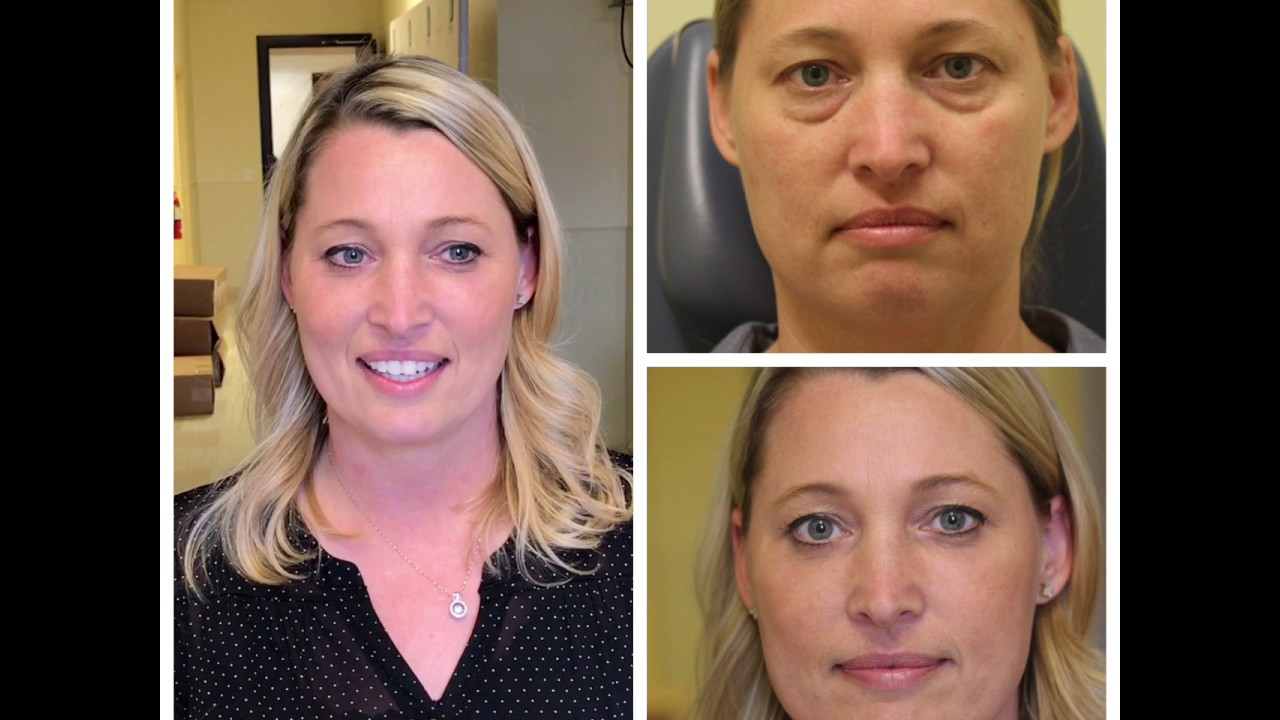

Dr. Nayak will then examine your eyelids to determine exactly what must be corrected to achieve optimum results.
Almost all patients require removal of some excess fat from the lower eyelids.
In addition, most require replacement of missing fat to the valley, or tear trough, that creates the “dark circle”. Some patients, with excessive skin wrinkling, may require laser skin tightening of the lower eyelid or conservative skin removal. Dr. Nayak will take a few moments to discuss these options with you to make sure they meet your personal esthetic goals.







Once you have decided to undergo lower eyelid blepharoplasty, Dr. Nayak’s staff will help you schedule your surgical date, and, about 2 weeks preceding that, a preoperative visit. Expect to spend about 90 minutes in the office on the day of your preoperative visit.
During this visit, you will be educated on before instructions, after instructions, and prescriptions. Written copies of all of these will be given to you at this visit, as well, and you will be able to fill your prescriptions ahead of time. You will also be reminded at this time to avoid for 2 weeks before and after surgery any medications and supplements that thin the blood.
Also at the preoperative visit, your private preoperative photographs will be taken, and the surgical consent form will be read to you. Finally, at the conclusion of this visit, the balance of your surgical, facility, and anesthesia fees will be due.

In general, you will be asked to arrive at 7:15 AM the morning of your planned surgery. You should have nothing to eat or drink (not even water, candy, or gum) after midnight the night before your procedure. If Dr. Nayak prescribed antibiotics, oral sedatives, or if you take blood pressure medication in the mornings, you may take these with a small sip of clear water.
Following a blepharoplasty St. Louis patients will need an adult driver on the day of their surgery to bring them and to take them home. Your companion may wait in our comfortable reception area, watching TV, reading, and enjoying coffee, soda, and snacks. Alternatively, if your companion wishes to leave a cellular telephone number, we can call him or her with updates and also at the conclusion of the procedure. Upon your arrival, Dr. Nayak's staff will greet you and review your medical history, looking for any new changes since your initial consultation. Dr. Nayak and his staff will also confirm that they and you are in agreement about which procedures are to be performed, and those areas will be marked with you sitting upright in a chair.
If you are a woman under 50 and have not been surgically sterilized, a urine pregnancy test may be performed. In any case, you will have one last opportunity to have last-minute questions answered and use the restroom, and will be escorted to our AAAHC-accredited surgical suite. Once there, you will be positioned comfortably on your back, with pillows behind your knees and under your neck. Blankets are also available if needed. You may also bring your own iPod or CD's, or listen to our choice of soothing music.
Painless blood pressure and oxygen monitors will be placed on your arm and finger, and massaging air-filled stockings will be placed on your legs and thighs to encourage excellent circulation while you are lying down. Most patients truly enjoy these stockings and find them very soothing. Dr. Nayak and his staff will then perform one final "time-out" aloud to ensure they are about to embark on the appropriate procedure on the appropriate patient. As the sedation takes effect, you will drift off to sleep and your lower eyelids will then be slowly, gently numbed with local anesthesia, and sterile towels will be placed around your face and neck.
Pain is generally mild or absent with eyelid surgery. The vast majority of St. Louis blepharoplasty patients take Tylenol or nothing, but stronger medications are prescribed just in case, as all other over-the-counter pain relievers will be off-limits for 2 weeks. A mild to moderate sunburn sensation may be felt on the lower eyelid skin if laser resurfacing was performed, but this is easily treated with pain medication. You will be asked to use intermittent cold compresses and keep your head elevated for the first few days.
At the conclusion of your procedure, Dr. Nayak will tell your companion how everything went, and he or she will have the opportunity to see you. You will be mildly bruised and swollen at this point. There are no bandages for lower eyelid surgery, and most patients will have no sutures or visible incisions. If laser resurfacing is performed, a thin layer of Vaseline will be applied to the lower eyelid skin.
You will be asked to spend 1 hour with us prior to being discharged. Dr. Nayak will call you the evening of the procedure to check on your progress, and you will also be given Dr. Nayak’s personal cellular phone number in case questions should arise after hours or on the weekends.
You should be up and about and feeling well the same day as eyelid surgery. Many patients find they nap intermittently the first afternoon, and are back to their regular energy the next day. You may shower and wash your face, getting the stitches wet, the day after the procedure.
By the 7th day after surgery, you will return to the office for a checkup visit. By this point, almost everyone may wear makeup, and is “presentable” to run errands or go back to work. By 2-3 weeks, most people are “undetectable”. If you are not self conscious about being seen with bruising, redness, or swelling, or if you work from home, expect to be back to work within 3-4 days!

Over the ensuing weeks and months, you will find your eyelids look better and better. Any lasered skin is generally mildly pink for a few weeks, but easily covered with regular makeup. By 3-4 months, the pinkness is generally gone. While duration of results depends on lifestyle, genetics, and ongoing skin care and sun protection, blepharoplasty is one of the most durable facial cosmetic procedures. It is not uncommon for results to last well over 10 years before touch ups are required. For detailed information about eyelid surgery, please visit: Eye Lid Surgery St. Louis.
We believe in complete pricing transparency. Unlike practices that hide costs until the end of a consultation, Nayak Plastic Surgery provides detailed fee schedules for each of our surgeons directly on our website. This allows you to understand the financial investment before ever stepping foot in our office.
The cost of blepharoplasty reflects the surgical expertise and comprehensive care provided at our St. Louis facility. While every set of eyelids is unique, we simplify the process by listing our fees clearly. To receive a personalized preliminary estimate and professional feedback, we encourage you to utilize our Complimentary Photo Review. By submitting photos through our secure portal, you can receive a direct assessment from our surgical team to determine if you are a candidate for an upper, lower, or quad-blepharoplasty.
While cosmetic blepharoplasty is generally not covered by insurance, the procedure may be covered if it is considered medically necessary (typically when vision is thoroughly impaired). We also offer several financing options through providers like PatientFi to find a plan that fits your budget.
Eyelid surgery excels at fat removal and eliminating excess skin, but it does not specifically target dynamic wrinkles like crow's feet. These are often best treated with laser resurfacing or neuromodulators, which can be performed alongside your blepharoplasty procedure for a comprehensive result.
While healing varies, most patients feel "restaurant-ready" within 7 to 10 days. St. Louis blepharoplasty patients can expect swelling and bruising to peak around day three before subsiding. We provide a detailed recovery plan to minimize downtime, and many patients return to work (with a little concealer) shortly after their sutures are removed.
To protect your healing incisions and prevent dry eyes or irritation, you will need to switch to glasses for the first two weeks. After your follow-up appointment, most patients are cleared to resume wearing contact lenses.
It is common to confuse heavy upper lids with a heavy brow. If the drooping skin is caused by the forehead descending, a brow lift may be necessary to elevate the tissue. Upper blepharoplasty specifically addresses the eyelid skin itself. Our blepharoplasty surgeons will assess your anatomy to ensure the correct surgical procedure is chosen for a natural look.
There is no "right" age. While many patients seek this procedure in their 40s or 50s, younger patients with genetically heavy bags often benefit from lower eyelid blepharoplasty in their 20s or 30s. The best time to pursue surgery is when the appearance of your eyes no longer aligns with your energy levels.
Our goal is to rejuvenate your eyelids, not alter your fundamental shape. We employ precise techniques to maintain your natural eye aperture. The result is simply a refreshed version of your own eyes—appearing as they did years ago, rather than a "pulled" or different look.

Frontenac
Monday: 8:00 AM – 5:00 PM
Tuesday: 8:00 AM – 7:00 PM
Wednesday: 8:00 AM – 5:00 PM
Thursday: 8:00 AM – 7:00 PM
Friday: 8:00 AM – 5:00 PM
Saturday: 8:00 AM – 12:00 PM
Sunday: Closed
Des Peres
Monday: Closed
Tuesday: 8:00 AM – 7:00 PM
Wednesday: 8:00 AM – 5:00 PM
Thursday: 8:00 AM – 7:00 PM
Friday: 8:00 AM – 5:00 PM
Saturday: Closed
Sunday: Closed
Chesterfield
Monday: 8:00 AM – 5:00 PM
Tuesday: 8:00 AM – 5:00 PM
Wednesday: 8:00 AM – 5:00 PM
Thursday: 8:00 AM – 5:00 PM
Friday: 8:00 AM – 5:00 PM
Saturday: Closed
Sunday: Closed